
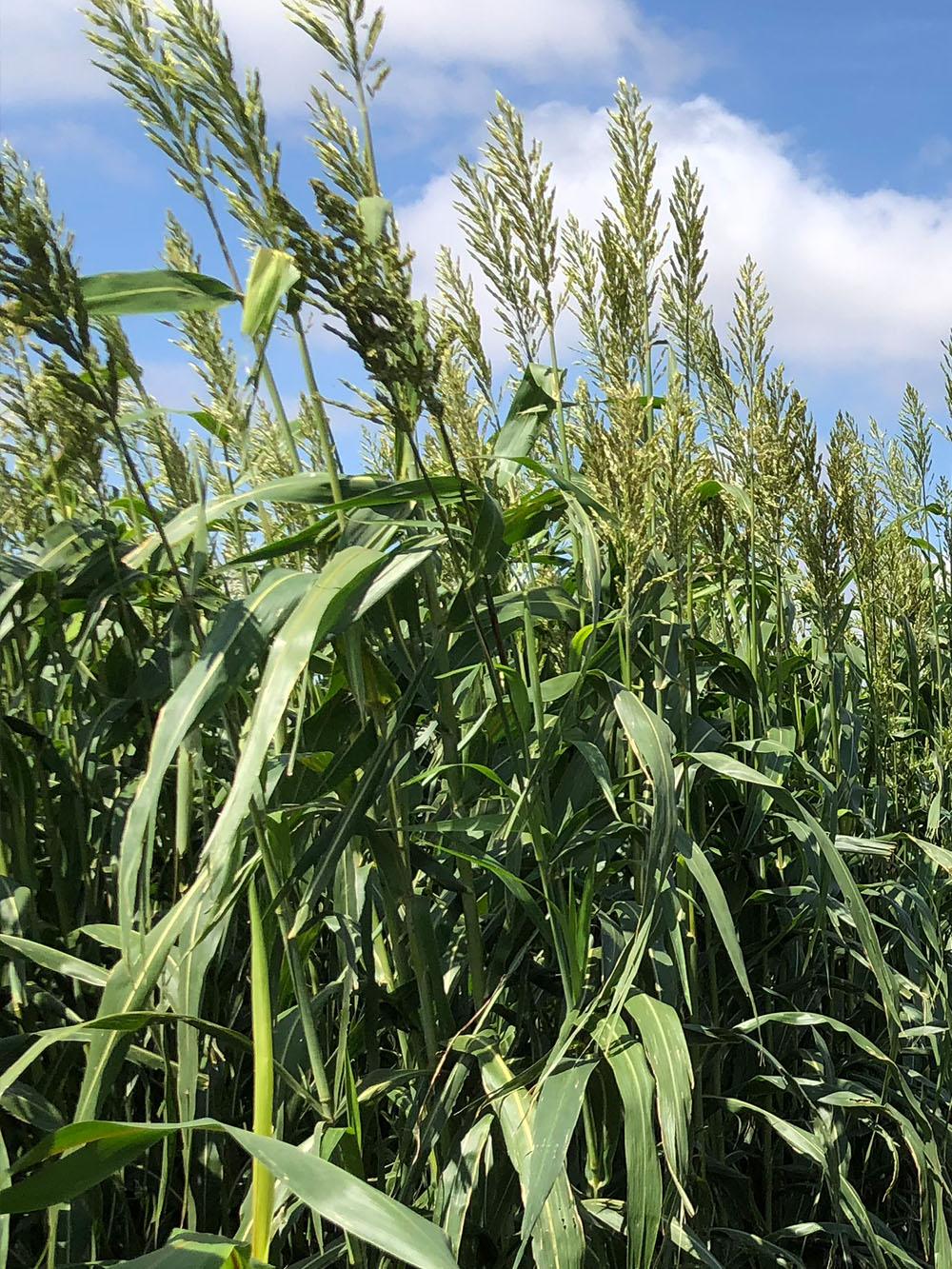
QuickDry BMR
Summer Select QuickDry BMR Sorghum x Sudangrass is engineered for rapid dry down times, addressing one of the primary challenges of harvesting in the northern U.S. and regions with higher humidity. This high-quality, high-yielding BMR 6 variety combines traditional sorghum x sudangrass characteristics with advanced BMR 6 gene technology to enhance its performance. Its impressive stay green and robust disease resistance make QuickDry a versatile choice. Featuring a traditional growth habit, QuickDry boasts wide, long leaves that contribute to its increased sugar content, resulting in improved digestibility for livestock. With fast establishment and regrowth, this variety maximizes productivity, ensuring optimal forage availability.
For more information about prussic acid poisoning, and how to avoid nitrate and prussic acid poisoning, please refer to "Data and Charts" or refer below.


Key features
- Widely adapted, fast establishment and regrowth
- Extended grazing season and superior for summer planting
- Increased sugar content, with improved digestibility
- Harvest flexibility
- Prussic acid (HCN) free with the BMR-6 trait
General Characteristics
Seeding Information
-
Recommended begin height of 22 to 30 inches
-
Recommended stop height of 6 to 8 inches
-
Intensive rotational grazing is recommended to manage the fast growth of the species
-
Recommended to wide swath each cutting so the crop wilts more rapidly until the desired moisture is reached
-
For dry hay, the optimal moisture level is 15% to 20%
-
For baleage (wrapped) the optimal moisture level is 50% (+or-10%
-
Recommended to wide swath each cutting so the crop wilts more rapidly until the desired moisture is reached
-
For silage/pile storage the recommended moisture level is 68% to 72%
-
Temperature of 60C and climbing
-
Higher moisture areas - 25 to 50 lbs/acre
-
High plains (lower moisture) - 15 to 25 lbs/acre
-
Do not plant in soil with a pH greater than 7.5 as Iron Chlorosis can be a problem
-
1" on heavy (clay) soil depending on moisture
-
2" on light (sand) soil depending on moisture
-
Can be no-tilled into the stubble of winter and spring crop
|
GRAZING
|
HAY/BALEAGE
|
SILAGE/HAYLAGE
|
|
|
|
|
|
SOIL INFORMATION
|
PLANTING/DEPTH INFORMATION
|
For the best quality first cut, plan to harvest within 40 days of growth, and less than 40 inches of growth. For optimum regrowth, the crop should be harvested leaving 2 nodes or approximately 6 to 7 inches of plant material. Ensure that a sharp blade is used for a clean cut. This will enhance regrowth. Sorghum species dry down slowly due to the bloom found on the plant (waxy white substance found on the stalks), so it is advised to swath the harvested crop allowing it to wilt to the desired moisture level before picking it up for storage. The quality levels, such as the NDFd and protein levels, decline as harvest is delayed. Harvesting during vegetative growth is imperative to ensure the ultimate in forage quality. For the highest energy levels, it is advised to harvest the crop at the flag leaf stage. The sugar formation in the sorghum stalks and leaves will be at their highest levels from this stage until grain formation.
Prussic acid poisoning occurs when plants such as sorghum, sudangrass, sorghum-sudan hybrids, Johnsongrass and others contain cyanide-producing compounds. If a large amount of these forages is consumed, especially after frost or during severe drought, prussic acid (cyanide) is produced. This interferes with oxygen utilization and livestock can die from respiratory paralysis. -University of Kentucky -Master Grazer https://grazer.ca.uky.edu/prussic-acid-poisoning
Do not harvest drought-stricken plants within 4 days of a heavy rain. Do not apply nitrogen prior to expected drought periods. If in doubt, cut at higher stubble height as nitrates tend to accumulate in the lower stalk. If high prussic acid is found, wait one month prior to feeding. Unlike excessive nitrates, prussic acid will escape from the plant overtime