
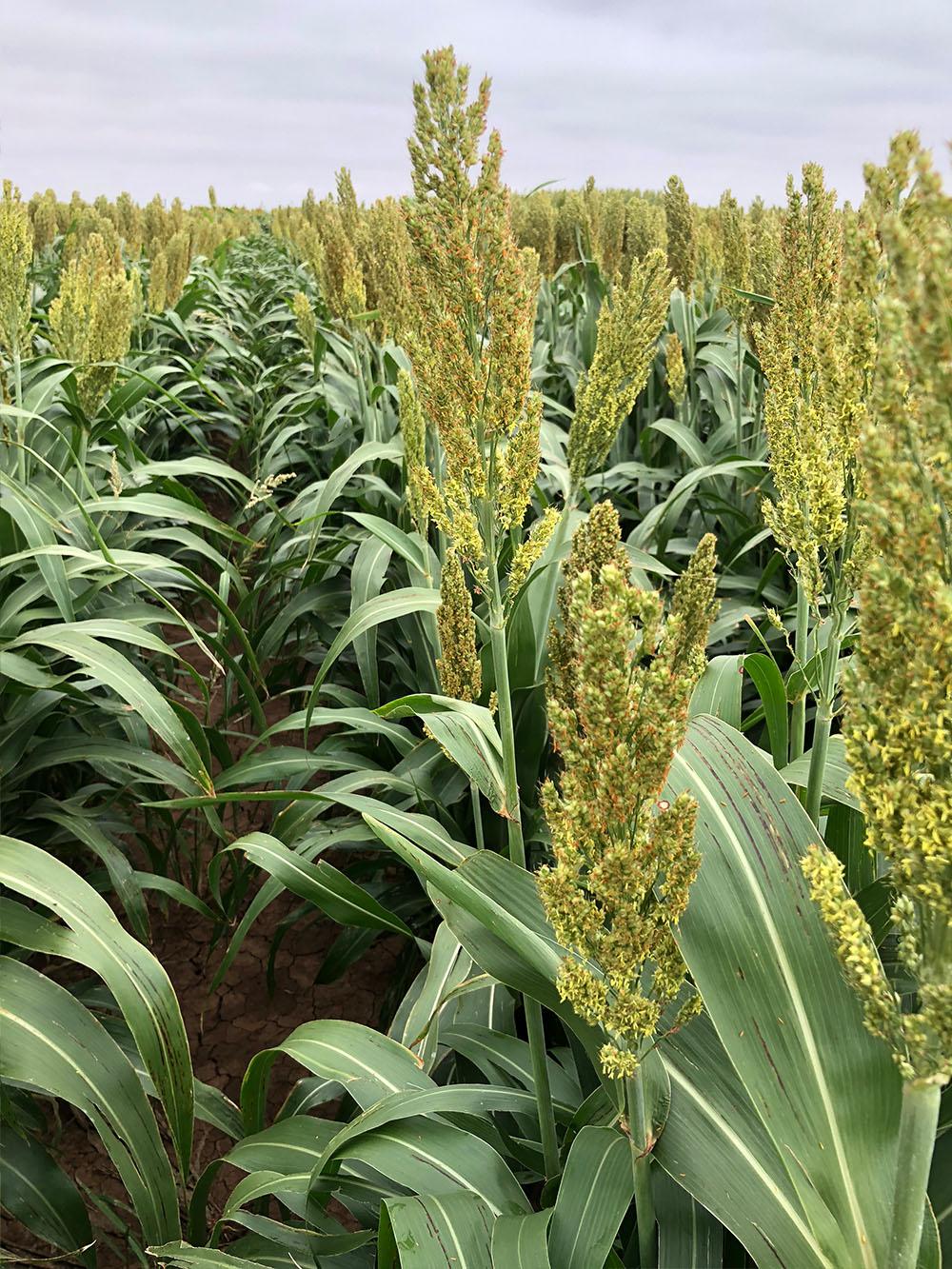
94 MS
Summer Select 94 MS Forage Sorghum is an economical, one-cut forage solution designed to deliver high yields of energy-rich forage. This male sterile variety is engineered for optimal performance, offering exceptional seedling vigor and robust growth. With sugar levels frequently exceeding 15%, it stands out for its high energy content, making it an ideal choice for livestock feed.


Key features
- High yielding and high forage quality
- Good disease resistance
- Male sterile, high levels of sugar in plant
- Resistant to anthracnose & downy mildew
- Excellent regrowth for a forage sorghum
General Characteristics
Seeding Information
- In 30 inch rows, 4 - 6 lbs
- In narrow rows, 5 - 7 lbs
- Soil temperature at 60C
- Planting depth on heavy (clay) soil at about 3/4"
- Planting depth on light (sand) soil at about 12" depending on moisture
- 1 - 1.25lbs of nitrogen per day of planned growth should be available for ultimate growth, with little risk of nitrogen poisoning
- Exceeding the recommended fertility may have negative lodging results
- Potassium levels should be maintained silimar to that of corn
- If soil pH is greater than 7.2, an application of iron may be necessary to prevent Iron Chlorosis
- Usually harvested between 85 - 95 days after emergence
- Approximate harvest height is 6 - 8 ft
- Harvest at proper moisture to maximize yield and quality (between 68% - 72%)
- Harvest prior to heading for higher protein levels; energy levels increase upon heading
- Dry hay and/or baleage are applicable where and when paper harvest management is followed.
- Dry hay is suitable for areas with less moisture and humidity; baleage offers more flexibility in all other areas
- Wide windrows are required for baleage products to ensure rapid dry down
- For silage, keep chop length uniform (around 1/2")
AVOIDING NITRATE POISONING AND PRUSSIC ACID POISONING Do not harvest drought stricken plants within four days following a heavy rain. Do not apply nirtogen prior to expected drought periods. If in doubt, cut at higher stubble height as nitrates tend to accumulate in the lower stalk. If high prussic acid is found, wait one month prior to feeding. Unlike excessive nitrates, prussic acid will escape from the plant over time. When questions about livestock safety remain, get forage tested promptly. |
||||||||||||